
Menu
How to Care for Stamped Concrete in Miami Gardens
Stamped Concrete Miami Gardens
Miami Gardens homeowners with decorative stamped concrete surfaces face unique maintenance challenges due to South Florida’s tropical monsoon climate. Intense UV radiation, high humidity levels, frequent thunderstorms, and year-round heat create conditions that accelerate wear on protective sealers and color finishes. Properties near Miramar Pineland Park and Sierra Park showcase beautiful stamped patterns that require strategic care routines to preserve their appearance and structural integrity. Understanding proper cleaning methods, sealing schedules, and preventive measures ensures these attractive surfaces maintain their visual appeal for decades. Implementing the right maintenance approach protects your investment while avoiding costly repairs or premature replacement needs.
Routine Cleaning Prevents Buildup
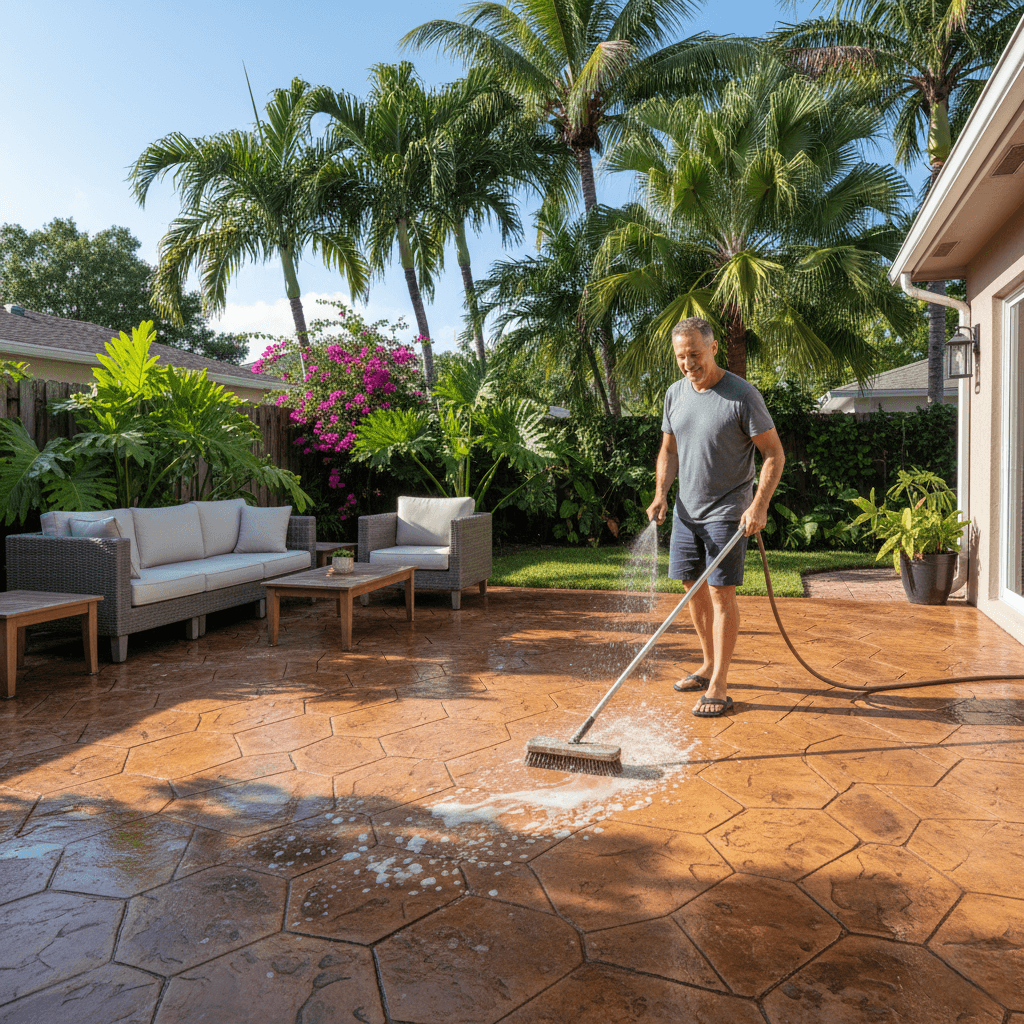
Routine surface cleaning will remove dirt, organic debris, and contaminants prior to them penetrating into the sealer layer(s) or staining the concrete below. Regular sweeping with a soft-bristled broom each week will help prevent abrasive particles that can scratch protective coating surfaces during foot traffic. Garden hose cleaning once per month at moderate pressure using a pH-neutral detergent will allow you to keep your surface clean without damaging your sealer. Be aware that high-pressure washers (over 1,500 psi) will strip protective layers off your concrete and expose your concrete to environmental damage and staining. Several property owners around McTyre Park have found that establishing a routine cleaning schedule is an excellent way to prevent the development of tough stains that would otherwise require extensive removal efforts.
Selecting Appropriate Cleaners for Your Stamped Concrete
When selecting cleaning solutions for your stamped concrete, select solutions that are safe for both the sealer and color of your stamped concrete. Cleaning solutions specifically made for decorative concrete that are pH-neutral will provide an effective cleaning solution without chemically damaging your protective coating. Do NOT use acidic cleaners such as vinegar, harsh degreasers, or ammonia-based cleaners that can thin sealers and cause white discoloration. Fertilizer run-off from planters and fertilizers used in lawn treatments can permanently stain surfaces. If fertilizer run-off comes into contact with your stamped surface, you will want to rinse your surface immediately. A mild dish soap diluted in water is an excellent cleaner for everyday maintenance that will not compromise the appearance or protectiveness of your surface.
Understanding Sealer Function and Importance in Miami Gardens Climate
Sealers are the first line of defense against moisture entering the concrete, UV rays causing discoloration, staining, and overall deterioration of the surface. Sealers also enhance the color vibrancy and deepen the tone of the integral colors in the stamped concrete. Sealers can also provide different levels of sheen from matte to high-gloss finishes. Premium quality sealers will protect the integral colors and release agent from fading caused by UV rays. Additionally, premium quality sealers will prevent the surface from absorbing water that can lead to cracking, efflorescence, and freeze/thaw damage during occasional cold snaps. Property owners around Ansin Park have seen firsthand how properly applied sealers will protect the surface and maintain its beauty despite being exposed to extreme weather conditions found throughout South Florida.
Establishing Proper Sealing Schedules
The sun and rain found in Miami Gardens will require more frequent sealer reapplications than those found in less humid and cooler climates. Premium quality acrylic sealers typically need to be reapplied every 18-24 months to maintain optimal protection levels. High-traffic areas such as driveways and sidewalks may require yearly re-sealing due to increased wear and tear from tire tracks and foot traffic. By regularly inspecting the surface for dullness, color loss, or loss of water beading, you will know when it is time to reapply the sealer. Establishing a proactive scheduling plan for the reapplication of your sealer will help to ensure your stamped surface remains vibrant and protected.
Preparation of Surfaces Before Sealer Application
Proper surface preparation will ensure a successful application of the sealer and maximize the performance of the sealer throughout its service life. First, thoroughly clean the surface using an approved cleaning solution, and then rinse the surface to remove all soap residue that can interfere with the adhesion of the sealer. Allow the surface to dry for a minimum of 24 hours before applying the sealer. If moisture is present on the surface after this drying period, the sealer may form bubbles, peel off, or display a white haze. Remove any standing water from textured depressions and control joints using a leaf blower. Always check the weather forecast for rain, and do not apply sealer if there is a chance of rain within the next four hours or if the temperature exceeds 90°F.
Application Techniques to Optimize Sealer Results
Using professional application techniques will provide consistent coverage and optimize the performance of the sealer across the entire surface of the stamped concrete. Using solvent-resistant pump sprayers will provide consistent distribution of the sealer and allow the sprayer to reach into the detailed texture and design elements of the stamped surface. When applying multiple coats of sealer, apply the sealer in a crisscross pattern to prevent visible lap marks and ensure complete coverage. Divide the surface into smaller sections and maintain wet edges to prevent visible seam lines in the finished surface. Applying two thinner coats of sealer will produce better results than applying one thick coat, as two thinner coats will prevent pooling of excess sealer in the lower areas of the surface and provide a more uniform level of gloss. Property owners in the River Run Park area have benefited from the attention to detail provided by our professional application techniques, providing uniform protection and a beautiful appearance.
Protecting Against UV Rays in Miami Gardens Weather Conditions
The intense sunlight in Miami Gardens presents many dangers to the stamped concrete colors and the sealer’s life expectancy. Choose sealers that contain UV-stable resins that will not degrade, yellow, or break down when exposed to the intense sunlight in Miami Gardens. These special UV-stabilized sealers will also maintain clarity while preventing the damaging effects of UV rays on the integral colors and release agent pigments. Standard epoxy coatings will turn yellow within months when exposed to the intense UV conditions found in Miami Gardens. Premium quality acrylic-based sealers containing UV inhibitors will provide exceptional performance, protecting color vibrancy and surface protection for numerous years and countless sunny days and hot summers.
Managing Moisture and Humidity Challenges Found Throughout Miami Gardens
High humidity and frequent rainfalls found in Miami Gardens pose moisture management issues that must be addressed by employing maintenance strategies. Reduce prolonged water exposure to your stamped surfaces by adjusting the spray heads on your sprinkler system to direct water away from your stamped surfaces. Elevation of planters and other decorative objects at least one-quarter inch above the surface of the concrete will allow for airflow and prevent moisture entrapment beneath the object. White hazing caused by trapped humidity can be removed from your surface by utilizing an xylene application method that re-emulsifies existing sealers and restores the appearance of the surface. Many property owners around Snake Warrior Island Natural Area employ moisture management strategies to extend the life of their sealers and maintain the aesthetic appeal of their surfaces.
Immediate Response to Spills That Can Cause Permanent Staining
Prompt response to spills can prevent long-term staining that negatively affects the appearance of the stamped concrete. Absorbent liquids should be blotted instead of wiped to prevent spreading the contaminant across a larger surface area. Oil, grease, and automotive fluids can be removed promptly using degreasers designed for use on sealed concrete surfaces. Promptly remove pet accidents to prevent acid from breaking down the sealer and causing discoloration over time. Leave-on leaf debris will cause tannin staining that will penetrate into the protective coatings and require removal before decomposition.
Avoiding Damaging Maintenance Practices
Several common maintenance practices can actually damage stamped concrete rather than protecting it. Never utilize metal shovels or sharp-edged tools that can scratch the sealer and chip the surface texture during cleaning and/or snow removal. Rubber-backed mats and rugs can trap moisture and restrict the ability of the concrete to breathe; never place these types of mats or rugs on your stamped surface. De-icing salts and harsh chemicals can rapidly break down the sealer and cause surface scaling; therefore, always avoid using these substances or take great care in choosing concrete-friendly alternatives. Excessive use of high-pressure washers (above 1,500 psi) will remove the protective layers from your concrete and ultimately expose the raw concrete to environmental damage and staining.
Seasonal Maintenance Needs
Miami Gardens has distinct wet and dry seasons that require unique maintenance approaches throughout the year to properly maintain the stamped concrete. In the summer rainy season from May to October, clean the surface frequently to remove organic debris and prevent mold growth on the surface. Fall provides the best weather conditions for reapplying sealer as the temperatures are moderate and the humidity is lower, making it easier for the sealer to cure. During the winter dry season, assess the surface thoroughly to identify any areas that need repair or touch-up work before the spring rains return. Prepare for hurricane season by securing any loose objects that could potentially scratch the surface and ensuring that the drainage is functioning properly to prevent standing water accumulation.
Establishing Regular Professional Maintenance Relationships
Developing a regular relationship with a contractor who specializes in stamped concrete maintenance will ensure that your stamped concrete receives the expert care necessary to address the unique climate-related challenges in Miami Gardens. Contractors experienced in working with stamped concrete will quickly identify early warning signs of sealer failure, surface damage, or emerging problems that require corrective actions. Professional-grade equipment and materials will produce better results than consumer-grade products found in most retail stores. Annual maintenance contracts usually include a thorough cleaning of the surface, an evaluation of the surface’s condition, any minor repairs, and the reapplication of sealer when necessary.
At Miami Gardens Concrete Pros, we offer comprehensive maintenance services uniquely suited to the needs of the South Florida climate, combining the latest technologies and materials with established techniques to maintain the beauty and functionality of your stamped concrete surfaces for years to come, while protecting your investment against premature deterioration.
LATEST POSTS