
Menu
The Cost of Concrete Repair in Miami Gardens: What to Expect
Concrete Repair Miami Gardens
Understanding concrete repair costs helps homeowners budget appropriately and make informed decisions about maintaining their properties. Prices vary significantly based on damage extent, repair methods required, project size, and numerous other factors. Miami Gardens residents face repair needs ranging from simple crack filling to comprehensive resurfacing or structural stabilization. Rather than delaying necessary work due to cost uncertainty, gaining realistic expectations about pricing enables property owners to address problems promptly before they escalate into more expensive situations requiring extensive intervention.
Factors Affecting Concrete Repair Costs
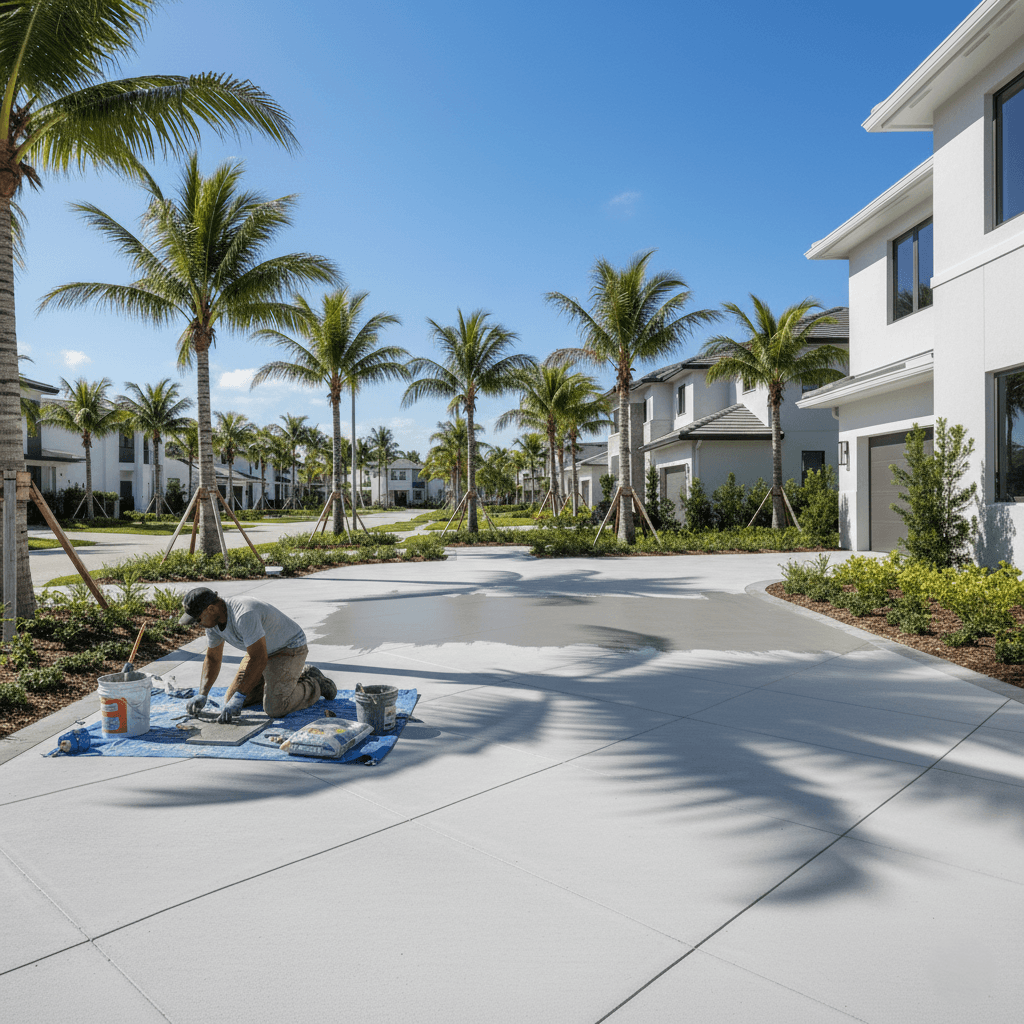
Many variables impact the ultimate cost of a repair job, making a simple quote impossible to make without an assessment. The first thing is how severe the damage is, and then the extent of the damage (i.e., how big the problem is). A minor surface crack, less than one-quarter-inch wide, will be much cheaper to repair than a large structural crack showing signs of foundation problems. Smaller isolated areas have smaller amounts of materials and labor to use than larger damaged areas, which could be across multiple areas of a driveway, patio, or sidewalk on a property near Hard Rock Stadium or the Bunche Park Community.
Accessibility of a Project Affects Pricing
The ease of getting to a location with equipment and materials also plays a role in determining the cost of a repair. Locations that have easy access to equipment and materials are less expensive to get to than those where equipment has to be taken down narrow paths or where special protective measures have to be put in place to protect landscaping or adjacent buildings. The contractor will take into account the amount of time needed to set up equipment, the equipment itself, and the number of people involved in completing a repair job when establishing a quote. Properties with unique site conditions or limited access will obviously cost more than those with normal working conditions.
Selection of Materials and Quality
Both the immediate cost of repairing your concrete and its long-term performance depend upon the materials you select for the job. While basic patching compounds for minor cosmetic repairs can be purchased inexpensively, high-performance, polymer-modified materials can provide much better bonding and durability than the inexpensive ones. If you want a decorative finish such as stamping, staining, or exposed aggregate, the cost will be higher than if you were to leave the area looking like a plain broomed texture. Quality products will cost more upfront, but they will perform better, last longer, and may help reduce future repair costs and your life-cycle costs.
Costs Associated With Crack Repairs
Repairing cracks is probably the most common type of concrete repair. Simple crack repairs typically cost between $1 and $3 per linear foot for minor cracks repaired with common repair products. Many contractors establish a minimum service charge of anywhere from $75 to $125 to pay for traveling to a customer’s home, setting up equipment, and providing the basic materials needed to complete the work, no matter how many cracks need to be filled. Homeowners in the Carol City neighborhood or near Lake Lucerne typically experience crack repair needs as their concrete ages and settles.
While simpler crack repairs involving only surface cracks and filled with repair compounds are less expensive, more complex crack repairs that involve structural issues or the use of specialized repair techniques can be very costly. For example, deep cracks that require epoxy injection or carbon-fiber reinforcing strips will cost more to repair than surface cracks. Jobs that need to fill 10 lineal feet of cracked concrete typically cost around $175 to complete, including the service charge. Larger jobs that treat 50 to 100 lineal feet of cracked concrete may cost between $500 and $1500, depending on the size of the cracks and the repair techniques used.
Expenses Associated With Resurfacing
Resurfacing involves applying a thin layer of coating to the surface of the damaged area, which covers surface imperfections and gives the entire area a new look. While this method is significantly less expensive than replacing the entire area, it does address widespread surface degradation. Typical costs for residential resurfacing projects vary from $3 to $7 per square foot, and include the cost of preparing the surface, applying the overlay, and finishing. A typical two-car driveway of approximately 600 square feet would, therefore, cost between $1800 and $4200 to resurface simply.
Adding decorative features to your resurfacing project, such as color, pattern, or texture, will increase the cost. Mid-range decorative finishes add $2 to $4 per square foot to the base resurfacing cost. High-end decorative finishes that incorporate multiple colors, complex patterns, or custom details may exceed $10 per square foot. While these premium finishes create an eye-catching focal point, they require highly trained application skills and specialty materials that are more expensive than standard materials. Property owners who live near the Palmetto Expressway or in the Norland area should understand the different cost ranges for surface restoration to plan their projects effectively.
Repairing Potholes, Spalling, and Broken Sections (Patching)
Repairing localized damage such as potholes, spalling, and broken sections typically requires patching instead of full resurfacing. Patch repairs for small, isolated damaged areas typically cost between $5 and $10 for basic DIY materials, or $80 to $200 per patch when done by a professional. Larger patches that measure several square feet require more materials and labor, and thus, the cost is determined by square footage at a rate of $8 to $15 per square foot.
Leveling and Lifting Services
Damaged sections of concrete that have sunk or are otherwise out of level must be leveled to ensure safe, even elevation and prevent tripping hazards. There are many methods of leveling concrete, each having different costs and benefits. Mud jacking, the traditional method, is typically less expensive than foam injection, but lacks the precision of foam injection. Grout leveling with stone slurry is another option that is priced between mud jacking and foam injection, and provides good results. Foam injection is the most expensive method, but it is effective in certain applications.
Typical residential leveling jobs cost between $750 and $6,000, depending on the size of the job, the method chosen, and any site-specific factors. Average jobs typically cost between $1100 and $1500 for standard residential applications. Smaller, single-slab areas tend to be closer to the lower end of the cost scale, while multi-area or expansive lifting needs will drive costs higher. Homeowners in the Scott Lake or Rolling Oaks neighborhoods experiencing settling issues should seek bids from multiple contractors to compare methods and pricing before beginning a project.
Foundation Repair Considerations
Foundation repairs represent the most expensive form of concrete restoration because they deal with structural integrity, which is critical to the function of the house, and technical complexity. Minor foundation crack repairs using epoxy injection to fix cracks typically cost between $250 and $800, depending on the length and accessibility of the crack. Much more extensive foundation stabilization using piers or underpinning techniques will cost between $1000 to $3000 per pier installed, with typical projects requiring multiple piers.
Total foundation repairs, whether addressing settlement, structural cracks, or stability issues, can cost between $5000 for smaller-scale repairs and upwards of $20,000 or more for comprehensive stabilization projects. While these are significant investments, they protect homes from progressive damage and maintain the structural integrity and property value of the house. Professional evaluations determine the appropriate solution(s) and cost(s) based on the site-specific conditions affecting the individual properties.
Other Factors That Affect Total Job Costs
In addition to the above-referenced repair work, there are many other factors that contribute to the total cost of a project. Miami Gardens requires permits for certain types of repairs, and these permits add a small fee to the project cost. When a structural engineer evaluation is required for foundation work or large repair projects, the cost for this evaluation will be between $300 and $800, but the resulting report will provide the necessary documentation and direction to complete the repairs correctly. Such evaluations help avoid the possibility of performing repairs that do not address the actual issue and, therefore, waste valuable resources.
When preparing a site for repairs, the cost of clearing vegetation, installing temporary fencing, or protecting nearby landscaping may also add to the cost of the repairs. Disposal costs for removed concrete or debris apply to replacement projects, but not to simple repairs. Property owners living near Vista Verde or in the Andover area may find that their site conditions are unique and, therefore, require different preparation requirements and related costs. Discussing all possible costs prior to beginning a project will prevent unexpected costs and allow for adequate budget allocations for the necessary work.
Labor Costs and Geographic Pricing Differences
Labor accounts for approximately 40-60% of the cost of all concrete repair work. Labor costs in Miami Gardens are higher than in many rural areas, but comparable to other South Florida markets. Experientially qualified contractors receive fair compensation for their expertise, the equipment and tools they purchase and insure, and their ability to provide quality repairs. Quotes that are too cheap often indicate that the contractor is inexperienced, does not have adequate liability insurance, or is using substandard materials that will not last and may compromise the quality of the repairs.
Timing and Seasonal Considerations
Timing affects both the availability and pricing of concrete repair services. During peak construction seasons, demand is greater, and prices may be higher, or schedules may be further out than in non-peak seasons. Some contractors offer mild discounts during off-season times, as they still have to keep some kind of schedule going. However, Miami Gardens has a continuous building season, and thus, there are few seasonal fluctuations relative to other areas that have cold winters and cannot do exterior work for months at a time.
Delays in necessary repairs typically will not save money, even though you may avoid spending money for a short period of time. Minor problems will grow over time, requiring more costly and extensive repairs. Cracks will continue to open wider, allowing water to enter, accelerating deterioration. Smaller areas of settled concrete will spread to the surrounding areas. Typically, the best way to minimize the cost of repairs over the long run is to fix the problems early when they are still relatively minor, avoiding the need for the extensive and expensive repairs that will be required later.
DIY vs. Hiring a Professional to Do Work
Some homeowners consider doing their own DIY repairs as a means to save money. Basic crack-filling materials cost $5 to $15 per tube, and simple patching compounds are available at similar prices. Therefore, it makes sense to attempt DIY projects on a small scale to save money. However, DIY repairs require knowledge and skill, which directly affect the quality of the repairs. Improperly applied DIY repairs will often fail quickly and will likely result in additional costs when a professional must go back to correct them.
Professional repair services include expertise, proper equipment, quality materials, and warranties to protect your investment. Professionals complete work faster and produce better results than unskilled DIY efforts. All but the simplest DIY repairs will be more expensive to hire a professional to do than attempting them yourself. Large, complex repairs, such as leveling, structural work, or large resurfacing jobs, will almost always require professional expertise and equipment that is outside of the reach of most homeowners.
Obtaining Accurate Quotes
To develop realistic estimates of the cost of a repair job, obtain written estimates from at least three experienced and reputable contractors. A good estimate will list the specifics of the work to be performed, the materials that will be used, the labor requirements, and the timeline for completion. Vague quotes that lack specificity are likely hiding costs or indicative of a contractor who does not know how to do the work correctly. Always request references, verify licensure and insurance, and review their portfolio before selecting a contractor based on price alone.
When receiving estimates from contractors, ask them to explain their proposed methods, materials, and timelines. Contractors should also describe how property-specific factors, such as cost and outcome, will be addressed. Contractors who communicate clearly regarding their estimating process will usually be consistent in their communication and work practices after the contract is signed. Understanding what the estimate includes and excludes will help to avoid disputes and ensure that the right funds are allocated to the necessary work.
Long-term Value and ROI
Repair costs should be viewed as investments in the preservation of property value and safety, rather than just the cost of the repairs themselves. Quality repairs made with the correct materials and executed by professionals will last for years. Inexpensive shortcuts made with substandard materials and improperly applied will require repeated repairs and ultimately cost more than quality repairs. Making quality repairs will preserve your property’s value and extend its lifespan.
Concrete surfaces that are properly maintained can last for decades with only occasional cleaning and sealing. Neglecting to properly maintain surfaces causes rapid deterioration and will require extensive repairs or even total replacement sooner than properly maintained surfaces. Considering repair costs as investments in preserving your property’s value and safety, rather than as a burden on your finances, will help you make informed decisions that protect your greatest asset.
Miami Gardens Concrete Pros offers transparent pricing, detailed estimates, and professional concrete repair services to meet all of the residential repair needs of our clients throughout the community, from minor crack repairs to comprehensive restoration projects requiring specialized equipment and expertise.
LATEST POSTS