
Menu
Understanding Concrete Slump: What It Means for Your Miami Project
Key Insights into Concrete Slump for Successful Miami Projects
At Miami Gardens Concrete Pros, we believe that educated clients make the best partners. That’s why we’re diving into a crucial aspect of concrete work that you might not have heard of before: concrete slump. Understanding slump can help you appreciate the complexity of concrete work and ensure you’re getting a quality product for your Miami project.
What Is a Concrete Slump?
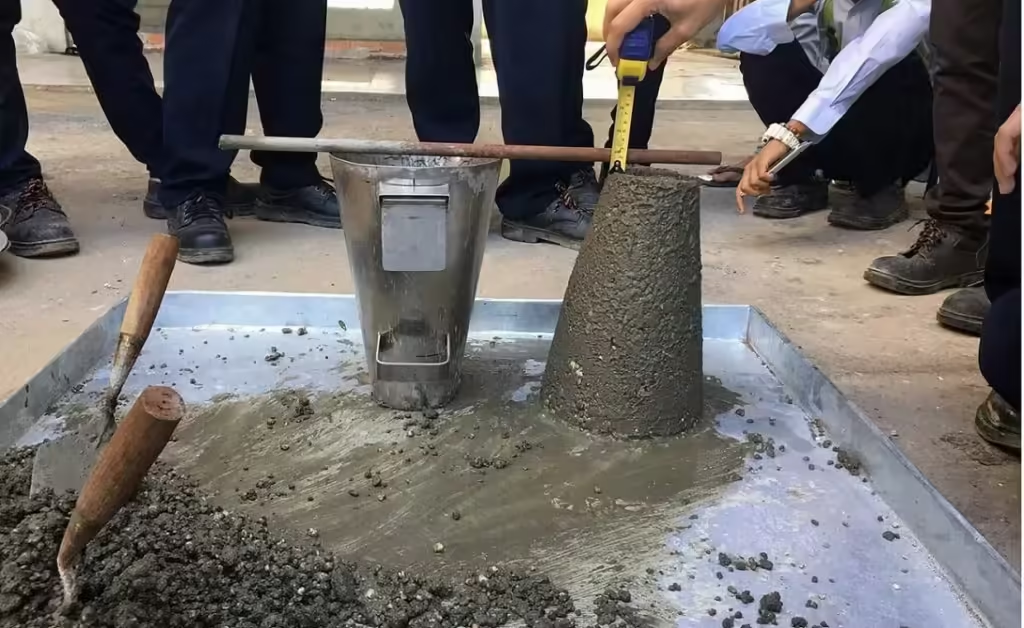
A concrete slump measures the ability of a new batch of concrete to flow or “work” — that is, to flow freely when placed in an area to be finished. This is a test of the consistency of the fresh concrete. As you may know, “slump” is the name given to the degree to which a fresh concrete sample will slump or settle after being released from its supporting container.
How Do We Measure Slump?
To perform a slump test, we use a cone-shaped mold
- Place a small sample of fresh concrete into the mold.
- Carefully lift the mold.
- Measure the slump — or the distance the concrete has fallen.
Typically, slump is expressed in inches. When the slump is low, the mixture is stiff; when the slump is high, the mixture is more fluid.
Typical Ideal Slump Measurements for Various Projects in Miami
As you’ll see, ideal slump measurements vary depending on the specific application
- Foundations and Footings: 3-4″
- Driveways and Sidewalks: 4″
- Walls and Columns: 4″-6″
- Floors and Slabs: 4″-5″
- Decorative or Stamped Concrete: 4″-6″
For those projects performed in Miami’s warm climate, the measurements above may need to be adjusted slightly to compensate for the local heat and humidity.
Other Factors That May Affect the Slump of Your Freshly Mixed Concrete in Miami’s Climate
There are several other factors that may affect the slump of freshly mixed concrete. In Miami, there are two factors that we feel are of particular importance
- More water increases the slump
- Larger aggregate sizes and types tend to lower the slump
- Temperature — In Miami’s warm climate, high temperatures can cause a reduction in slump over time
- Humidity — Higher humidity levels in Miami’s climate can slow the rate of evaporation of water from the surface of the newly mixed concrete.
- Additives — Certain additives can either increase or decrease the slump
- Time — Generally, slump decreases as the concrete begins to set.
Miami Gardens Concrete Pros’ Process for Ensuring Proper Slump for Each Project
We ensure that each project receives the proper slump through the following methods
- Regular testing of the slump of both the wet and dry samples of the mix during the mixing process, and again before the concrete is delivered to the jobsite.
- Adjustments to the mix design as needed based on the requirements of the project and the current conditions.
- Taking into consideration the effects of the environment (e.g., temperature and humidity).
- Applying additives to the mix as necessary to control the slump.
- Timing the delivery and placement of the concrete properly to minimize slump loss.
When to Discuss Slump with Your Miami Contractor
At Miami Gardens Concrete Pros, we strive to provide the best possible service by ensuring that all of the concrete used in your project meets the needs of the project in terms of both appearance and durability. If you have any questions regarding the technical aspects of your concrete project, or if you’re ready to get started with a team that knows the science behind excellent concrete performance in Miami’s climate, contact us today. We are happy to help you with your next project.
LATEST POSTS